Monday, December 25, 2006

Thanks to your help, this book is complete!


Thanks for your help in building this blog-book (blook?).

My latest research will be found at Go Thunk Yourself, S'more and A Modern View.

But you can still help continue to improve this book...

Your comments are welcome - this is the only way we can improve this book and make it better. So please feel free to leave your opinions and suggestions. That's where I'll be able to read all your input and discuss it with you.

So as a blook, this isn't finished - I've published it as a book, but in beta. As this book is published in Print-On-Demand, I can come out with a new edition anytime I want to. So updating the content is incredibly easy. This means I want to know what you think and what you care about in your own self-help.

Yes, I've done quite a bit more research since this was sent to the publisher and posted to this blog. But any research is never final. That's where you come in. As there are no schools that have all the teachers, no single person has all the answers.

And I'd like some of yours. So read, think, comment - today.

Luck to us all...

Wednesday, September 20, 2006

Participate in a revolution in publishing

Found this great publisher, Lulu.com, which was founded by Bob Young of Red Hat fame. The trick with this is that they have it nailed down to just do the publishing and delivery for you. You do all the marketing - so there isn't any real overhead to pay for. You set the price and Lulu takes 25% of your profit, above what it costs to produce the book. But the neat trick is that I can update a book in minutes, meaning there is no problem with producing special editions for promotional events, much less correcting errors.

That's the nitty gritty of that end.

Now, what I've done is to combine book-blogging with such a fast POD publisher. Now the reader can help write the book. That's the key point. I publish the book in beta via the blog and Lulu simultaneously. My readers are able to give me rapid feedback via the blog comments - which arrive on my e-mail account. I correct the errors and tell that reader again via the blog.

So now we have near complete transparency and real reader input into how a book is written and what goes into it.

Here's your chance. Let me know what you think and how you'd write it better...

Just to help you out, I've put all the public domain references on Lulu so you can download or order your own hardcopy versions and make your own conclusions. Then tell me about them with a comment.

I don't know that anyone else has attempted this, either way this is a true revolution in publishing - bringing the Internet Age to this industry.

Wednesday, August 09, 2006

The update you deserve...

Where this blog-book is now going.

Thanks for viewing this blog. If this is your first impression, you can see that I've arranged this blog to publish a book currently in beta form. This is version 0.85 for your use. As I get updates to this, I'll perform the needed changes and get them out to you.

Currently, I've been working on the final form and have an available preview for you. The argument I've had is to make this available on only a per-chapter basis or all at once. One side says that you have the chapters available all online right now, so what is the difference. Another argument is that many eyes can see the editing errors in the final proof before I send it to a Print-On-Demand publisher.

As well, differences between the print and online edition need to be scoured for and corrected.


What's next...

There are a couple more books on the way. Along the course of this study, a new and stream-lined method of thinking developed. It's pretty radical, but has personally given me an incredible increase of speed and ability to think outside any box. It creates a human brainstorm, after a fashion. And now it's a book, via Lulu.

Alongside this research has developed an underlying system of personal thought and self-programming. It seems we think all the time and re-program ourselves all the time. What self-help does is take this re-programming and bring it under your personal control. So this third book gains even more steam as it builds on the first two. My problem is making the time (and keeping myself fed, clothed and under a roof...) to get these books out to you.

Blog-books are all works-in-progress, having the capability to take any book from it's beta version through 2.0 and beyond. It's arguable whether a book could have sequels which then are 2.0, 3.0, etc. In this case, I don't know that the second book really follows on the path the first one takes, but is a supplemental to it. The third gives a practical approach to employing what I've outlined here and also the later research since this book was written.

I imagine at this point that the third book would be the last for this area. This is as when you completely enable the person to change and control his own life, the rest of this is over to that person to accomplish. I certainly don't want to build any cult or sect which builds some philosophic silo around what I write or propose - in order to upsell converts and "make money". I would rather enable the opening of philosophy and making this subject relevant to modern life and living. I'd rather be given the tools to build or repair my house than have to stick with what the original builder provided and having to return to him everytime I have to get a new closet, new coat of paint or a new roof.

Many eyes, as Eric Raymond has it, make more solutions possible for a given problem. For my book, I'll be the head cook coordinating all the many cooks in this kitchen. Others can write their own books. Rest assured that your comment will be given due attention and consideration. I don't consider myself any imperial source in this area - rather I consider this just some fresh thinking which needs peer review.

Good hunting to us all!

Robert
- - - - -
further update 060906:

I posted this book as a blog in order to open the editing process to all readers. While I am responsible for its creation, I consider myself also responsible to you. As you see something you would like to add, or modify, let me know in a comment. I'm alerted via e-mail for every comment and will evaluate them for improved content.

As well, I've already sent this book to press, via Lulu.com. This is a Print-On-Demand outlet. Their organization allows me to update the book at will, making changes as I approach the 1.0 edition and even later.

I'd like to add a larger Resources section with more links. I'm sure you know of other references and examples which illustrate the text presented. As I have time, I hope to expand this text with such additional input.

We have here an experiment in publishing. Including the readership in the writing and editing. Enabling the Long Tail to create their own niche product.

Shortly, I'll also enable these books to be sold via Amazon and other brick-and-mortar stores - of course they take their split before I see a dime of it. (So buy your books as above, or send me a donation directly - see link to the right .)

Let me know. I'm waiting to hear from you.

Tuesday, August 08, 2006

Introduction

God helps them who help themselves.” Benjamin Franklin – The Way to Wealth

Nothing is achieved without investment; there are no free rides, free lunches or lottery winnings without something being done or given in advance or in return. Another phrase, time-worn: You get out what you put into it. So this book guarantees nothing. Results will vary from person to person, just as hair, eye and skin color aren't perfectly identical in any two people, even twins. This book only gives you an option to do something about anything you would like to improve in your life, from an extreme of getting outrageously wealthy to simply getting along better with a loved one or an enemy.

People who want to change something in their lives will find some way to do it. This book is nothing but an introduction into the vast field of self-help or self-improvement. It became necessary to write this book after a study was undertaken of several successful self-help books written as far as 6 centuries apart. All of them were successful when first published and are being reprinted and sold today, some of them hundreds of years after their authors died. That was the criterion: they had to be still in circulation or best sellers long after their authors died – showing that people generally still found them useful and workable, not dependent on the personal magnetism of the author. Then some best-selling modern self-help books were reviewed as a cross-check of the accuracy of these points. The common points that each had were summarized and included in this text, modernized and made simpler to remember and use. The book was written in a modern style to make it simpler to read and understand.

I don't have to tell you these will give you success. That the majority of these books have been continual best-sellers for as many as 90 years proves people have found them useful and applicable. There are hundreds of thousands, if not untold millions of people who have improved their lives or gotten prosperous from using these principles, many even before you or I were born. I really bring nothing new to this world with this writing, only putting it all in one spot and giving you a simple system to apply these to your lives. This book's system of distilled principles will work as much as you put yourself behind them and you will get out only in proportion to what you put in to your study, your application and your doggedness in seeing this through.

As I've said before, this book is just a mere introduction to the common system of self-help subject as described by the referenced authors. All the references I've used to boil down these basic points to their system are listed in the appendix at the back of this book. You can and should read these yourself to further your own understanding and ability in the area(s) you've chosen to improve. All are available on the Internet in one form or another and many are still being actively published today.

How to get the most out of this book.

There are three commonly known approaches to study:

  1. Study with a purpose in mind – what are you trying to get out of this book? Why are you reading this instead of watching TV, listening to music or doing your homework?

  2. Don't go past anything that doesn't make sense. While some things you have to accept on faith for the moment while the author then gets on with explaining it or giving examples, watch out for things like oddball nomenclature or technical terms which look and sound weird to begin with. But also, sometimes the author uses a word which doesn't make sense the way he uses it. He could be wrong, but this would make the whole sentence not makes sense, and maybe the paragraph, section and/or chapter – your loss, not his (since you already paid for the book, spent time at the library checking it out, or downloaded it when you could have been doing something else.) So keep a dictionary handy, and maybe a thesaurus and/or small encyclopedia around, so you can at least figure out what he was trying to say.

  3. Make sure you can apply it as you go. While some textbooks (and professors) make their readers swallow a huge amount of theory before they get to (if they ever do) some real use you can put this stuff to, it's often best to work out examples for yourself as you read. This keeps it in the real category, not the “I'll probably never use this anyway” back-burner section of your mind. So if you get to a point where you can't actually put it to any use, go back over the earlier sections to see where it quit making sense, sort that out, and then come forward. You might have to sketch it out or make some notes for yourself to do this sorting. As has been noted by various education and self-help professionals, doing is the best way to learn – in addition to reading or studying.

Dale Carnegie also boiled it down quite simply at the beginning of one of his Public Speaking books1:

In order to get the most out of this book and to get it with rapidity and dispatch, do these four things:

a. Start with a strong and persistent desire. ...

b. Prepare. ...

c. Act confident. 'To feel brave,' advises Professor William James, 'act as if we were brave, use all of our will to that end, and a courage fit will very likely replace the fit of fear.'

d. Practice.”

These apply to learning about self-help in more ways than you can imagine. A great deal of these applications will be explained or pointed out as we go through this book. But the above advice also applies to many different in-life situations, such as learning to drive a car or taking a college course.

The other point is that this book is not just read it and stash it. The best use for this book is to:

  1. Read one chapter a day, plus any relevant section of the referenced authors for that day,

  2. Do the exercises each day,

  3. Finish the book by reading each chapter and summary,

  4. Start over, repeating 1-3.

The reason for this is that repetition enables you to be more sure of being able to apply what you've studied and also to see the results as you go along. The exercises are written on a gradual slope of increasing difficulty and improved ability. When you finish off the book and start doing the first exercises again, you now will get much more out of the exercises, since you are coming back to them at a new, higher level of understanding and ability.

While I tell you a bit more about this later, you can get more out of this book by reading the other authors listed while or after you read this book. I'm not published by these book publishers, and most of the referenced authors have been dead for some time (excepting only one) so I don't get a dime from sending anyone their way. Simply, this is an introductory book, a summation of what these other authors researched. It's usually best to get the original data from the original sources. This book is just to tell you who to look up on what subject, so you don't have to burn 20 years of your own life winding your way on false leads trying to get out of the labyrinth.

Self-help is an evolving subject. There have been many changes over the years and more will be coming. Here I hope you get a thorough introduction to the heavy-weights in the field and get well-started on your own journey of self-improvement.

So: Good luck. As the Irish saying goes,

May the road rise up to meet you on your journey.”

Day 1 - REASON

A reason to change, something to shoot for, goal.

“There are three types of people in this world: those who make things happen, those who watch things happen and those who wonder what happened.” - Mary Kay Ash

Before anything can change, there needs to be a reason for change. Nothing in this universe is unmotivated, if only by the need for entertainment or distraction from boredom.

I take it that you picked up this book to get something out of it. There must then be something in your life that you would like to improve upon.

Do you always have enough spending money? Are you successful in life in every direction you attempt? Are you happy constantly, making friends easily and forming many deep, trusting relationships as a result?

Maybe you'd simply like to kick a bad habit, or get over a loss, or lose a few pounds.

All these things are possible to you, providing you want to change.

Right now, write down in the margin of this book – or one of the back pages or a separate page – exactly what it is that you want to change. You can always modify this later or change it to something entirely different if you want to. That is the premise of self-help: you can change something about your life if you want to.

Maybe, as a result of this book, you'll have such success with improving that item that you want to go ahead and change something else. With this book, or the books referenced in the back, you'll certainly be able to.

But it starts with deciding that something needs to be improved and exactly what that is. Now, if you haven't written that something down somewhere, do it now.

There's one caveat to know before starting this journey of self-improvement:

You can't get without giving.

Just as there is truly no free lunch or free beer, so any idea that just by reading a book you are going to get better without doing something yourself is a false one. Life itself has the lesson that you get out what you put in. The more you want to work at something, the better you will get at it. Musicians practice daily. Sport stars practice daily. Actors rehearse over and over, even after they have memorized their lines to perfection, even though they've given the show time after time for weeks. Practice makes perfect.

And so it is with any self-help or self-improvement activity. One must take personal responsibility for one's condition. Through this book, we'll go over the theory and reality of why this is so. One could always sue a fast-food chain for one's condition, but practically that will only get you money, not any improved condition. If you want to lose weight, go on a diet and stick to a sensible plan of meals once you are down to the weight you want. If you want to gain weight, there are many programs which will tell you to go to a gym and exercise, plus eat more protein. But these changes only start with you making a conscious decision to do something about your own condition.

You don't have to have a dire condition or take drastic, emergency actions to change it. But you do have to realize that in order to improve a condition, you are personally going to have to take responsibility for handling it, regardless of how you got that way. That is always the first step, which follows from noticing that you have a condition you'd like to change.

Through this book, we'll cover various exercises and techniques you can use to do something about your chosen area to improve. While it will be up to you to make the changes, we will have already done the homework to make sure that the techniques have been uncovered and point out additional resources you can study to find out more if you feel you need to.

But you'll get out what you put into it. That is the only guarantee we can make.

Day 1 Exercises

Try this –

1. Take what you wrote down and put it on a card. Now turn that card over and write that same phrase in the past tense: instead of, “I'd like to have a new car,” write “I have a new car.” Put that card on your nightstand so you see it last thing at night and first thing in the morning. If you can, write another card and take it to where you work so you can keep this in mind in spare moments during the day. (We'll cover why you're doing this later. For now, we need to get the object you are trying to improve out there in front of you so you can study the rest of this book.

2. Select a room where you can be alone and undisturbed. Sit in a comfortable chair, erect – do not lounge. Let your thoughts roam as they will, but be perfectly still from 15 minutes to a half-hour. Practice in this daily will enable you to start controlling your body its physical area.

3.Next, in the same chair, be perfectly still, but allow the muscles in the body to relax, along with every nerve until you feel more quiet and restful. Mastering this will become easier as you practice it, enabling you to apply it while at work or at home, making life easier to appreciate and enjoy.

These exercises form the basis of a regular regimen which can bring about much improved conditions in your life, based entirely on how much you'd like to change your life around. We'll be adding to these drills as we go, so realize that you have plenty of chance to practice at them and get better – you don't have to be perfect the first day.

Many of these exercises come from Charles F. Haanel's work, The Master Key System. See the appendix for this and other books which can help you with the self improvement you are looking for. This book is the merest introduction to a very wide and broad topic. These exercises are culled from many sources, Haanel being a key one.

Have fun!

Feel free to donate to forward this research, via PayPal.

Buy my books!


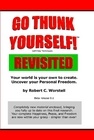
Go Thunk Yourself!(TM)

Go Thunk Yourself!(TM)

From $10.15

What do Napoleon Hill, Norman Vincent Peale, Dale Carnegie, and Stephen Covey have in common? 

They all THUNK the same way. 

They each discovered the same basic secrets behind wealth, success, and fame - and became wealthy, successful and famous.

You can too.

This book's simple 14-day program allows you to recreate your own life, just the way you want it to be! All you have to do is invest some time each day to read these simple chapters and do the exercises. 

You can learn these secrets and start taking control over your own life, to start achieving the riches, fame and success you've always dreamed of.

Dreams CAN BECOME Reality!


Additional books by this author:

Go Thunk Yourself, Again.

Go Thunk Yourself, Again.

Go Thunk Yourself, S'more!

Go Thunk Yourself, S'more!

Thinking at Internet Speed

Thinking at Internet Speed

How Self-Help Authors Write Bestsellers

How Self-Help Authors Write Bestsellers


Other books edited by this author:

Conceive, Believe, Achieve!

Conceive, Believe, Achieve!

Haanel's Master Key System

Haanel's
Master Key System

The Thomas Troward Collection

The Thomas Troward Collection

The Law of Success - In Sixteen Lessons

The Law of Success - In Sixteen Lessons


Products I Recommend From Amazon:

James Allen
As A Man Thinketh
As a Man Thinketh Book Cover
Napoleon Hill
Think and Grow Rich
Think and Grow Rich Book Cover
Charles F. Haanel
Master Key System
Master Key System Book Cover
Dale Carnegie
How to Win Friends and Influence People
How to Win Friends and Influence People Book Cover
Norman Vincent Peale
The Power of Positive Thinking
The Power of Positive Thinking Book Cover
Wallace D. Wattles
The Science of Getting Rich
Science of Getting Rich Book Cover
Stephen Covey
The 7 Habits of Highly Effective People
7 Habits of Highly Effective People Book Cover
Thomas Troward
The Edinburgh Lectures
The Edinburgh Lectures Book Cover